
Low Back Pain or Constipation?
Many times in my practice I have seen clients coming in complaining about reoccurring low back pain that had nothing to do with an injury or arthritis. Rather, they were having chronic constipation. They feel like their low back feels unstable, some feel sharp, shooting pain; others experience pressure and throbbing sensation; most experience weakness and difficulty moving around. All symptoms were made worse with worsening symptoms of constipation.
The double disruption of constipation and low back pain can keep you in a cycle of suffering that worsens and spreads as we age. In this article, I will demystify this cycle and offer some Ayurvedic routines for relief based on individualized needs.
How Internal Pressure Displaces Your Back
The abdomen is a crowded space. With over 20 feet of digestive tract, liver, spleen, kidney, bladder, and more overlying our vertebral column. Due to this close proximity, when there is swelling, bloating, or congestion in the digestive tract, all other organs get pushed around to accommodate.
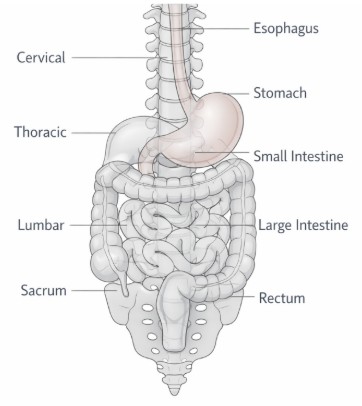
With chronic constipation, the pressure primarily builds up in the rectum area. This area of the rectum is a close neighbor of lower lumbar and sacrum areas of the vertebral column. Accumulation of feces, gas, and inflammatory changes can put physical pressure on and displace the lower back area. This results in different experiences of discomfort arising in the low back.
The body tries to resist this displacement by tightening up the low back muscles. The predominance of this tightening and mechanical pressure causes a dull throbbing sensation in the low back. Sharp, shooting and cramping pain may occur and the nerves of the low back become irritated due to this displacement.
Referring Pain Signals in the Sensory Nervous System
The body’s sensory and motor nerves travel along the spinal cord. This super highway of nerves flowing between the brain and body has exits at each vertebral level. Nerves at each vertebral level connect with all the organs, muscles, and other body parts at that level. For example, nerves that connect to the low back and to the colon travel side-by-side and come out of the same vertebral level. In some individuals, the nerves going to the colon may have crossed wires with nerves going to the low back. Therefore, when the colon sends a pain signal, referred pain can make it feel like pain is coming from the low back.
In conditions like this, even short bouts of constipation, gas, colic can lead to irritation of low back muscles and perception of low back pain.
Fecal Impaction Causing Sciatica
When stool has been accumulating for a long time, it becomes dryer and hardened. This block of fecal matter can cause the colon to become a bulging mass. In this case, internal crowding can feel like a constant weight sitting on the sciatic nerve. This mimics symptoms of sciatic nerve block coming from the low back causing shooting pain, tingling and numbness around the low back, travelling down the buttocks and legs.
Fecal impaction can become severe and dangerous conditions needing urgent care. Please look for following signs of severe impaction:
- Liquid stool leaking around the blockage (might be mistaken for diarrhea)
- Severe cramping that gets worse after eating.
- A swollen and hardened abdomen.
Is Your Pain Muscular or Digestive?
Musculoskeletal Pain is typically Mechanical. It reacts to how you move your frame and align your spine:
- Movement-Triggered: Pain sharpens or dulls based on physical actions like twisting, pulling, lifting, or climbing stairs.
- Postural Sensitivity: Discomfort is directly linked to your position—sitting in a slumped chair, standing for too long, or sleeping in an awkward spot.
- Structural Origin: The pain usually stems from a specific “hitch” in the joints, discs, or tendons of the vertebral column.
Digestive Back Pain is typically Systemic. It follows the internal “schedule” of your gut rather than your physical movements:
- Cyclical Fluctuations: Pain often intensifies leading up to a bowel movement and provides immediate evacuation relief once stool or gas is passed.
- Internal Pressure: Discomfort scales upward with visible bloating or abdominal distension, regardless of whether you are sitting or standing.
- Symptom Clustering: Back aches rarely travel alone; they are frequently paired with nausea, stomach cramping, or a “heavy” feeling in the gut.
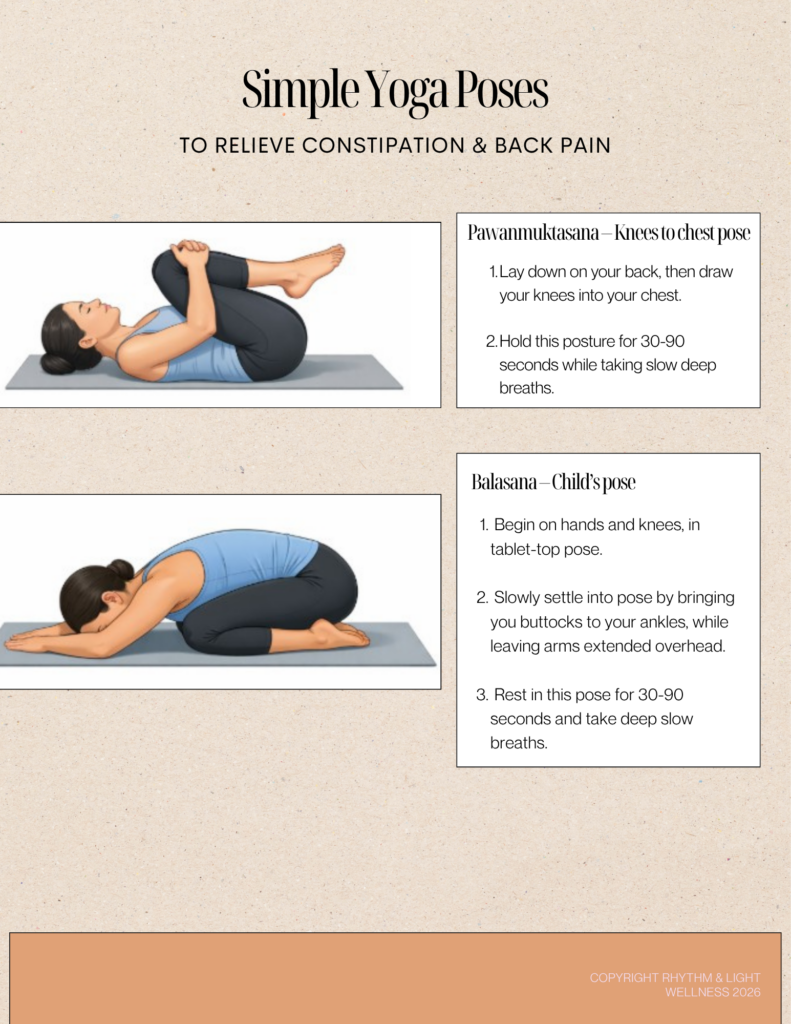
- Positional Release: Unlike mechanical injury, this pain is often relieved by compression poses (like pulling knees to chest) which help move trapped gas and waste.
Quick Comparison: Muscular vs. Digestive Back Pain
| Feature | Musculoskeletal (Mechanical) | Digestive (Systemic) |
| Primary Triggers | Twisting, lifting, pulling, or sudden movement. | Eating, bloating, or your body’s digestive schedule. |
| Relieving Factors | Rest, ice, or specific postural adjustments. | Passing gas, bowel movements, or “knees-to-chest” poses. |
| Pain Quality | Localized “hitch” or sharp pain in a specific muscle. | Vague, deep, aching, or “squeezing” sensation. |
| Timing | Often sudden onset after physical exertion. | Fluctuates; may worsen after meals or during constipation. |
| Related Signs | Swelling or bruising in a specific back area. | Accompanied by nausea, cramping, or abdominal fullness. |
How to Relieve Constipation and Back Pain?
When I see clients with severe constipation, I go through the process of understanding the underlying functional issues. Constipation may have variety of mechanisms, some biological and some mechanical:
- Low digestive enzymes can cause constipation due to difficulty breaking down fiber.
- Immune irritability can cause inflammation that slows down motility leading to constipation.
- Nervous system irritability can cause blockages with peristalsis (natural movement of digestive tract) leading to constipation.
- Dysbiosis: overgrowth of fermenting or opportunistic bacteria can disrupt the normal function of the colon to cause constipation.
Understanding the individualized mechanism of the problem allows us to choose appropriate herbal and lifestyle support for lasting relief. Here are some home remedies you can try to feel better now:
Home Remedies:
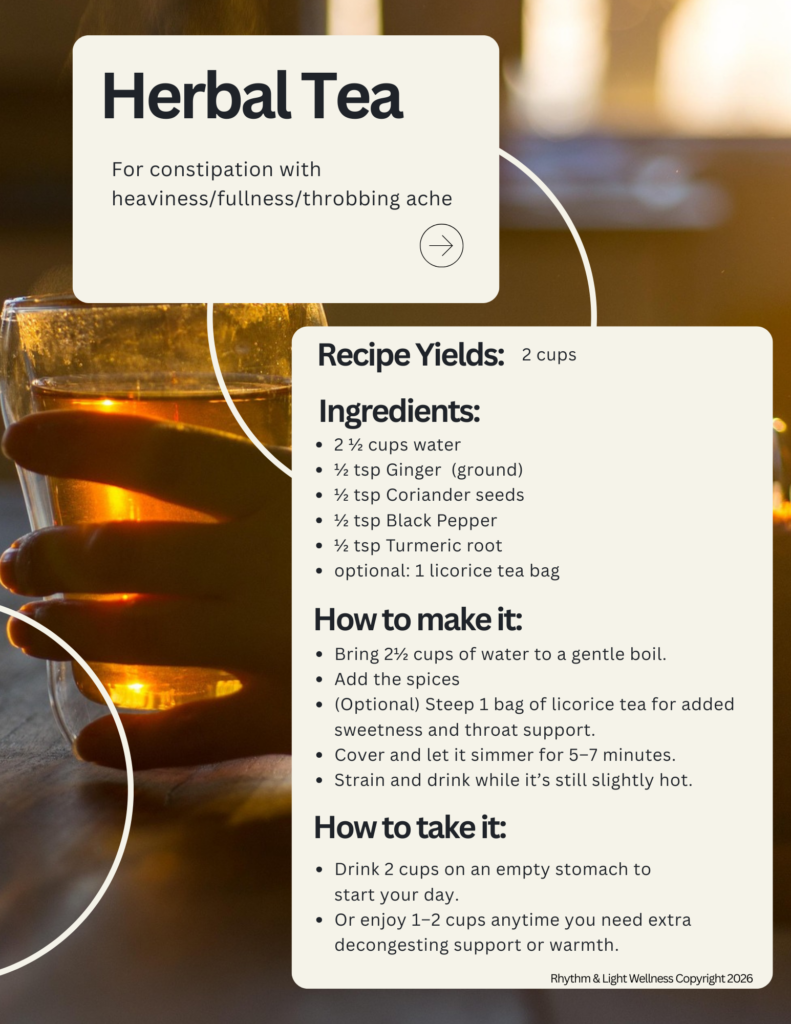
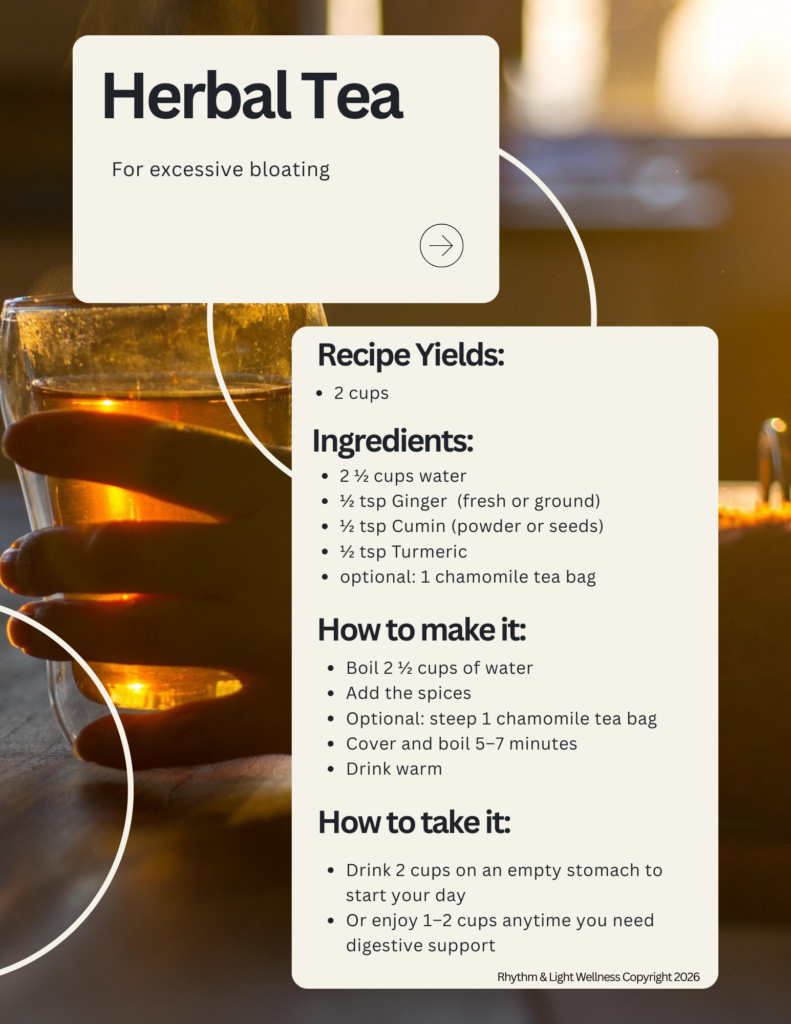
Below you will find two herbal tea recipes for two different kinds of constipation, simple yoga poses and dietary suggestion for constipation relief.
Steamed Fibrous Veggies:
Fiber feeds the anti-acidic bacterial flora in our digestive ecosystem. Additionally, these fibrous vegetables help to capture fatty toxins, excess cholesterol, binding waste for elimination. (Read more: Best diet for IBS blog)
Studies show, low-FODMAP diet can help to speed up this shift towards an alkaline digestive tract. Some low-FODMAP fibrous vegetables are:
- Broccoli
- Carrot
- Cabbage (red/green)
- Celery
- Leafy greens: Kale, Collard, Arugula, spinach
Taking about 1-2 cups of these specific fibrous vegetables per day, in addition to the standard 3-4 cups of mixed vegetables per day is ideal.
When the digestive system is backed up and disrupted, the best benefit is derived from moderate to well steamed vegetables. Season your vegetables with black pepper, ginger powder, garlic powder, and pink salt for best results.
Conclusion
When people come into my care, as an ayurvedic naturopathic doctor I focus on discerning the root cause of their pain. As you can see, back pain is not always caused by muscle-skeletal issues, nor is it always caused by the same digestive disorder. By identifying the cause, we can best treat the condition giving immediate and long term benefit to optimize your whole health.
If you suffer with back pain or constipation and would like to feel better, please schedule a 20 minute complimentary consultation with me to discover what we can do about it.


